Run the Business vs Change the Business: Why RTB/CTB Belongs in a Museum
The Model That Assumes Software Is Ever Finished

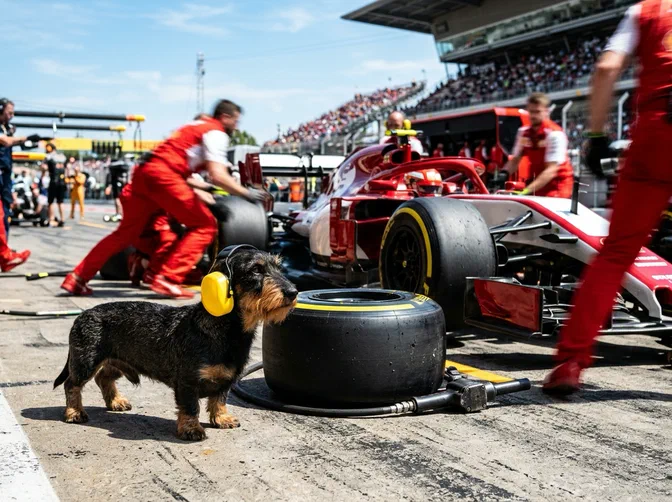
In 2006 I was working at ABN AMRO, and every line of technology spend had a label on it. It was either “run the bank” or “change the bank”. Change was where the projects lived: a programme was approved, a team was assembled, the software was built and declared done. Then it was handed to run, a different organisation with a different budget and a different boss, whose job was to keep it alive until somebody approved the next project.
Nobody thought this was strange. It was simply how banks worked, and in some banks it still is.
Run the business and change the business (RTB/CTB) is a model that splits technology into two buckets. Run covers operating and maintaining the systems you already have; change covers the projects that build or alter them. Banks call it run the bank, change the bank. The real damage comes when the split moves from the budget into the teams.
Splitting the spend is harmless. Splitting the teams is the real killer, and it rests on one assumption: that software can be finished. Build it, declare it done, throw it over the wall to a run team, and move the builders on to the next project. That assumption is wrong for almost every product a customer touches, and it is the reason I think RTB/CTB belongs in a museum (with one or two honourable exceptions).
What a board cares about is how much engineering capacity goes into keeping the lights on, how much goes into change, and whether the people doing the change are accountable for what happens after it ships. RoadmapOne makes that allocation visible: squads in rows, sprints in columns, every objective tagged as run or change, so the split between running and changing the business is a number on the screen rather than an argument in the budget round. Unlike a two-bucket budget line, it also shows who is doing the work, which is where RTB/CTB tends to go wrong.
TL;DR: RTB/CTB is built on the horribly flawed assumption that software can be built, “finished” and thrown over the wall for a different team to manage. That is anathema to the modern product approach, where teams are accountable for outcomes and the rule is “you build it, you run it”.
Since ABN AMRO I have seen the worst version of it: a change team builds whatever the most senior person in the room wanted, the team is disbanded, and a small “applications management” team inherits the result with a mandate for small fixes and nothing more. At a different company I disbanded a 30-person run organisation, hired three engineers to sit with the product team, and made them accountable for the outcome. Customer satisfaction went through the roof, almost instantly.
What Run the Business and Change the Business Mean
The two buckets are simple to define, which is a large part of their appeal. Every initiative, every budget line and often every person in the technology function is sorted into one of them.
Run the Business (RTB)
Run the business is the cost of keeping today’s systems working: infrastructure, operations, support, licences, security patching, incident response and the small fixes that stop things falling over. In some organisations it is labelled BAU, for business as usual. It is close to what product teams call KTLO, keeping the lights on , with one important difference that I’ll come back to: in the RTB/CTB world, run is usually done by different people from the ones who built the system.
Change the Business (CTB)
Change the business is the cost of altering what you have: new systems, new features, migrations, regulatory changes and transformation programmes. It is typically funded project by project, with a business case, a start date, an end date and a team assembled for the duration. When the project ends, the team moves on and the output joins the run estate.
Run the Bank, Change the Bank
Banks use the same split under a slightly grander name, and they use it at scale. HSBC, for example, sorted its roughly $5 billion annual IT spend into “run the bank” and “change the bank”, with about 70% going to run between 2005 and 2008 (Githens, 2011 ). Splits of 70/30 or 80/20 in favour of run are commonly quoted for established banks; the aspiration CIOs talk about is usually something nearer 50/50.
The Flawed Assumption: Software Is Never Finished
Knowing how much you spend on keeping things running is useful; I’d want to know it about any business I sat on the board of. The arithmetic is fine. The trouble starts with what the split does to the organisation, because it turns a budgeting convenience into a team structure.
Thrown Over the Wall
Once change and run are separate budgets, they become separate teams, separate reporting lines and, before long, separate empires. The change team is measured on delivering the project: on time, on budget, to the specification that was agreed months ago. It is never measured on whether customers used the thing, because by the time anyone could find out, the team has been disbanded and reassigned.
The run team is measured on stability. It inherits software it didn’t design, written to requirements it never saw, and its rational response is to change as little as possible; every change is a risk to the only metric it is judged on. So the product freezes on the day it ships. Whatever the specification got wrong stays wrong, because the people who could fix it have gone and the people who remain are paid not to touch it. It is the failure I’ve written about in Ship It and Move On , institutionalised into the org chart.
Versus: You Build It, You Run It
The modern product approach starts from the opposite assumption. A product is never finished; it is iterated until it stops being worth iterating. The team that builds it runs it, carries the pager, sees the support tickets and owns the outcome, which is the core of Marty Cagan’s product operating model . Teams are funded as long-lived squads with objectives to achieve , not as projects with a scope to deliver.
In that world the run/change distinction still exists, but it lives inside the team as a share of its capacity. A healthy squad spends part of its capacity keeping the lights on and the rest improving the product, and because it is the same people doing both, the incentive to build something maintainable is built in. Nobody writes the shortcut they’ll be woken up at 3am to fix.
Why RTB/CTB Survives: Museums of Technology
If the assumption is so flawed, why is the model still everywhere in financial services? A former boss of mine had the answer: banks are “museums of technology”. And to be fair to RTB/CTB, there are exhibits in that museum for which it is a perfectly reasonable way to work.
Platforms That Don’t Do Sprints
A lot of the platforms in a large bank are not amenable to short iterative sprints that drive for an outcome. The core ledger on a mainframe, the payments engine, the settlement system that talks to a clearing house: nobody is running weekly experiments on those, and nor should they. The work that comes along is well defined, often regulatory, and takes months to implement. A new reporting requirement arrives with a specification and a deadline; the outcome is “compliant by the deadline”, and there is no customer to delight.
For that kind of change, a project with a defined scope and a fixed date is the right shape for the work, and nobody should mistake it for a failure of imagination.
Specialists in Arcane Platforms
The people who run these platforms are specialists in the arcane hardware and operating systems underneath them, knowledge that even the COBOL or RPG developers writing the applications on top usually don’t have. Keeping a mainframe estate or a fleet of midrange machines healthy is a distinct craft, and those skills are scarce, expensive and not something you can spread thinly across a dozen product squads. A dedicated run organisation for that estate is a rational response to a real constraint.
Segregation of Duties and Production Access
There is often a regulatory angle too. In a regulated environment, giving the engineers who wrote a change direct access to the production systems that move customers’ money may simply not be realistic; segregation of duties is a control auditors and regulators care about, and “you build it, you run it” can collide with it head on. Automated deployment pipelines, peer review and break-glass access can often make the two compatible, but on some platforms the constraint is real and you have to design around it rather than wish it away.
So the honest position is that RTB/CTB fits the museum. The damage starts when the museum’s operating model is applied to everything else.
What It Costs When It’s Applied to Products
The real cost shows up on the digital products: the app, the website, the onboarding journey, anything a customer touches and judges. These are exactly the things that need iteration, and exactly the things RTB/CTB is designed to stop iterating.
Build the HiPPO’s Wishlist, Then Disband the Team
The worst scenario I have seen starts with an approved change programme. The change team builds a large batch of software that matches the HiPPO , the highest-paid person’s opinion of what customers want, because there was no discovery and nobody was measuring outcomes. The programme is declared delivered. And then the team is actively disbanded, because the project is over and the project budget has run out. What remains is software built to an opinion, and nobody who understands why it was built that way.
The Applications Management Team
What usually inherits it is a small “applications management” team inside the run organisation. Its mandate is small fixes and KTLO work, and nothing more. It has no budget for improvement, no product manager, no access to customers and no say in what gets built next. If the onboarding flow converts badly, that is a problem for the next change programme, whenever somebody gets round to approving one.
It is horrible for the team. Engineers who joined to build things spend their days patching something they’re not allowed to improve, and the good ones leave. It is equally horrible for outcomes, because there is no iteration at all; the first version of the product is, in practice, the last.
No Iteration Means No Outcomes
Put the two halves together and you get a product organisation that cannot learn. The people who could learn from customers have been disbanded; the people who see what customers do are not allowed to act on it. Every improvement has to wait for a new business case, a new budget cycle and a new team, which means months or years between the problem appearing and anyone being able to fix it.
The AI era makes this worse. Building software has never been cheaper; the expensive part now is learning what customers will pay for, and that learning only happens through iteration by a team that stays. A model that builds once and then freezes is throwing away the one thing that cheap build cost was supposed to buy you.
What an RTB/CTB Split Tells a Board
From the board seat, and in private equity due diligence, I treat an RTB/CTB split in a technology pack as a signal rather than a fact. On its own it tells you very little; what matters is why the organisation is structured that way.
Three Possible Readings
When I see a business running its technology on run-and-change lines, I know I am dealing with one or more of three things. It may be a product and engineering function that desperately needs to modernise, in which case there is a lot of potential upside. It may be sitting on a lot of legacy technology that really does need specialist care. Or it may be operating under hard regulatory constraints that make the model partly unavoidable. Usually it is a mixture, and the job is to work out the proportions.
The Questions I Ask
The first question is how much of the revenue is associated with the products that sit in this model. A back-office settlement system run on RTB/CTB lines is not a concern; the customer-facing product that generates most of the revenue is a very different matter.
The second, and the biggest, is how much of the value creation plan is predicated on those products. If the investment case depends on growing a product that is currently frozen in an applications-management team, then the plan has a hidden cost in it: the investment required to get that product to the right place, with a real team that owns its outcome. That number is rarely in the plan, and it is often the most important number in the room.
From there I want to see the split at the level of named products and teams, not as a percentage of the IT budget. “70% run” across the estate tells me nothing; “the product that earns 60% of revenue has had no change capacity for two years” tells me everything.
Getting Out of RTB/CTB: It Depends
As with everything, the answer is “it depends”. There is no single playbook that is right for a mainframe ledger and a mobile app, and anyone who tells you otherwise is selling a methodology rather than solving a problem.
Ring-Fence the Museum
For the platforms that really are museum pieces, keep them in a run-and-change model, deliberately and visibly. Ring-fence the estate, staff it with the specialists it needs, and fund regulatory change as the projects it is. The important word is deliberately: the museum should be a choice made about named systems, not a default applied to everything because that is how the budget has always been laid out.
Collapse the Buckets Where Outcomes Matter
For everything a customer touches, collapse the two buckets into long-lived product teams that own both the change and the run.
At a different company (not ABN AMRO) we were running exactly this model. We had a 10-person team responsible for defining “product” and a 30-person team responsible for running it, with no connection at all to outcomes. The productivity of the run organisation was so low that we disbanded it completely, hired three engineers to sit alongside the product team, and made them accountable for the outcome. Customer satisfaction went through the roof, and it happened almost instantly.
Three engineers replaced thirty, and the product got better. That is not because the thirty were bad engineers; it is because the structure gave them no reason to improve anything and no permission to try. Give a small team the outcome, the authority and the context, and it will outperform a large team that has none of them. It is the same logic as the minimum viable team for a new bet: two engineers and a product person, dedicated, protected and accountable.
Measure the Move by Outcomes
The RTB/CTB ratio is a poor way to show a board the transition is working, because a product team that owns its run will spend a share of its time on maintenance, and that is healthy. Show the outcome metrics the team is now accountable for (conversion, retention, satisfaction, incident rates), and show the capacity allocation by product and by type of work, so the board can see change capacity reaching the products that carry the revenue.
Why Two Buckets Aren’t Enough
Even where RTB/CTB is used purely as a budgeting lens, two buckets hide most of the decisions that matter.
“Run” lumps together very different things: true keeping-the-lights-on work, regulatory compliance, technical debt that is slowly strangling delivery, and the incident load from systems nobody is allowed to fix. “Change” lumps together incremental improvements to products you already sell and new bets that might not work. A business that is 30% change could be spending all of it on cosmetic tweaks to the core, or all of it on a moonshot, and the two-bucket view cannot tell you which.
That is why Gartner’s Run, Grow and Transform model, in effect, splits change into two, and why frameworks such as the Three Horizons of Growth carry a time dimension the two buckets lack. RGT is a really good place to start, though not the only answer; once you tag work by intent, the question shifts from “how much do we spend running things?” to “are we investing in the right mix of defending, growing and reinventing the business?”
The budget split also tangles with accounting. Change work is often capitalised while run is expensed, which gives everybody an incentive to call things change; the opex vs capex classification and the run/change label are related, but they are not the same question and should not be answered by the same spreadsheet.
Frequently Asked Questions
What is the difference between RTB and CTB?
RTB (run the business) is spend on operating and maintaining existing systems: infrastructure, support, licences, patching and small fixes. CTB (change the business) is spend on building new systems or altering existing ones, usually funded as projects. The distinction is useful for budgeting, but it becomes harmful when it turns into separate teams, because the people who build the software stop being accountable for how it performs once it ships.
What does run the bank mean?
Run the bank is the banking name for run the business: the share of a bank’s technology budget spent keeping existing systems working, from core ledgers and payments platforms to support and infrastructure. Its counterpart is change the bank, which funds new systems, regulatory changes and transformation projects. Large banks have historically put around 70% or more of technology spend into run the bank.
What does CTB mean in business?
CTB stands for change the business. It is the portion of technology or operational spend that goes on changing how the organisation works: new products, new systems, migrations, regulatory projects and transformation programmes. CTB work is typically funded project by project, with a defined scope and end date. That shape suits regulatory change well, and suits customer-facing products, which need continuous iteration, badly.
What is a typical RTB/CTB split?
Established banks and large enterprises commonly report 70/30 or 80/20 in favour of run, and many CIOs aim for something nearer 50/50. The ratio on its own says little. A board should ask which products sit in each bucket, how much revenue they generate, and whether the products the growth plan depends on have a team that is accountable for improving them.
Is RTB/CTB the same as Run, Grow, Transform?
No, though they are related. RTB/CTB has two buckets: running what exists and changing it. Gartner’s Run, Grow, Transform keeps run and splits change into grow (improving and extending the existing business) and transform (new business models and bets). The extra bucket matters because “change” otherwise hides whether you are tweaking the core or investing in the future.
Conclusion
RTB/CTB made sense in a world where software was a capital project: specified, built, delivered and then maintained, like a building. Some of the platforms in a bank’s museum still work that way, and for them a deliberate, ring-fenced run-and-change model is a sensible choice.
Everything a customer touches works differently. It is never finished, it needs a team that learns from every release, and that team has to own the run as well as the change, because the people who carry the pager are the ones who build things worth running. Splitting those jobs across two organisations freezes the product on the day it ships and leaves a small applications-management team guarding it.
Keep the museum for the exhibits that belong there, and give every product that earns your revenue a team that builds it and runs it.
