Category: Strategy & Planning
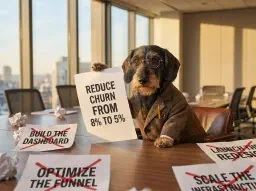
OKR Examples for Product Teams: 30+ Objectives and Key Results That Actually Work
Problems to Solve, Not Features to Build
30+ OKR examples for product teams—framed as business problems, not features. Includes bad-to-good rewrites, real-world examples from Google and Intel, examples tagged by Run/Grow/Transform, and how each Objective connects to squad allocation on your roadmap.

OKRs vs KPIs Explained: The Complete Guide for Product Teams
What You Watch vs What You Chase—And Why Most Teams Confuse the Two
KPIs are what you watch. OKRs are what you chase. KPIs tell finance what happened last quarter. OKRs tell product teams what to change next quarter. Here's the complete guide to the difference—with real examples, common mistakes, and how the two work together on your roadmap.

The Product Operating Model: A Practical Guide From Inside Cagan's Trainline Case Study
From Specs-Over-the-Wall to Empowered Teams — And the Tool We Built to Make It Work
The product operating model is how the best tech-powered companies work. I know because I was there — as CTO at Trainline, featured in Marty Cagan's Transformed. Here's what the product model actually looks like in practice, how we aligned 650 people around outcomes, and why I built RoadmapOne to make it repeatable.

The Culture of Adequacy: Your Customers Don't Want Minimum — They Want Magnificent
How Product Leaders Accidentally Train Teams to Be Mediocre
Many teams have been conditioned into adequacy: shipping the bare minimum of everything and the full potential of nothing. Here's the spectrum from Minimum Product to Maximally Awesome Product, and why your crown jewels deserve obsessive, beautiful, category-killing investment.

Crown Jewels: Why Your Most Important Feature Is Slowly Dying
Every product has two or three capabilities that disproportionately matter to customers. Over time, product teams lose sight of these crown jewels—until a competitor does them slightly better and the loss ratio spikes. Here's how to identify, protect, and relentlessly improve the features that define your product.

Ship It and Move On: The Recipe for a Mediocre Product
Great Features ALWAYS Need a Second Act
Your roadmap shows Feature X shipping in March, then the team immediately moves on. That's the recipe for a mediocre product—an agglomeration of half-baked MVPs where nothing makes customers go 'wow'. Here's why great products need a second act.