Topic: Prioritisation
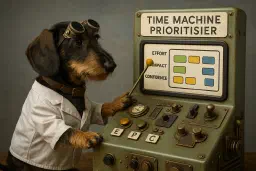
Objective Prioritisation, The Science of Sequencing Strategy
Objective prioritisation is the brutal art of choosing which objectives to fund first. Learn how RICE, ICE, WSJF, MoSCoW, NPV, ARR, Kano, Cost of Delay, Payback Period, Buy a Feature, ROI, Benefit, and more turn infinite backlogs into executable roadmaps.

Dot Voting Has No Business Near Your Roadmap
Democratic Theatre Belongs in Retros, Not Prioritisation
Dot Voting is everywhere—design sprints, retros, roadmap workshops. It belongs in facilitation, not prioritisation. Here's why democracy produces roadmaps that reflect politics, not value.

GE-McKinsey Matrix: Board-Level Portfolio Strategy, Not Feature Prioritisation
When Nine Boxes Beat Four—And When They Don't
The GE-McKinsey Matrix helps boards decide which product lines deserve investment. It's portfolio strategy, not feature prioritisation—here's when the 9-box grid earns its complexity over simpler alternatives.

Product Lifecycle Stage: The Tag That Changes Everything About Prioritisation
Why the Same BRICE Score Means Different Things for Different Products
Product Lifecycle Stage—Introduction, Growth, Maturity, Decline—is a tagging framework that changes how you interpret prioritisation scores. A high-BRICE initiative for a declining product might still be the wrong investment.

Stack Ranking: The Prioritisation Panacea That Never Works
Why 'Just Put Them in Order' Ignores Reality
Stack ranking feels like the ultimate prioritisation solution—just order everything from 1 to N and execute. In practice, it ignores capacity, dependencies, and team skills. The item ranked last often must be built before the item ranked first. Roadmaps are art as much as science.

The 100 Dollar Test Is an Alignment Tool Disguised as Prioritisation
Use It for Buy-In, Not Backlogs
The 100 Dollar Test forces trade-offs by giving stakeholders fake money to allocate. It's better for alignment than prioritisation—the real value is the conversation it creates, not the numbers it produces.

The Eisenhower Matrix Has No Place in Roadmap Planning
It's Vocabulary, Not Methodology—Here's What to Use Instead
The Eisenhower Matrix isn't a prioritisation framework—it's vocabulary. Learn when the Urgent/Important grid helps board conversations and when it creates dangerous blind spots in your roadmap.

Weighted Scoring Is Subjectivity Wrapped in a Veneer of Objectivity
Why Bespoke Criteria Usually Produce Score-Gaming Theatre
Weighted Scoring promises customised prioritisation through bespoke criteria and adjustable weights. In practice, it usually produces score-gaming theatre. Learn when it works, when it fails, and why simpler frameworks usually win.

Objective Prioritisation: BRICE
RICE + Strategic Alignment = Roadmaps That Actually Serve Business Goals
BRICE extends RICE with Business Importance—forcing teams to explicitly score strategic alignment before reach and impact. Stop building high-impact features that don't matter to the business.

Objective Prioritisation: Benefit
When Absolute Value Matters More Than Investment Efficiency
Benefit prioritisation ranks objectives by pure value delivered—revenue gained or costs saved—over 12, 18, or 24 months. No ratios, no formulas, just pounds. The simplest framework the board will actually understand.

Objective Prioritisation: ROI (Return on Investment)
The Timeboxed Benefit Calculator Finance Actually Trusts
ROI prioritisation ranks objectives by benefit-to-cost ratio over 12, 18, or 24 months—simpler than NPV, more financially credible than gut instinct. When finance demands numbers but won't accept spreadsheet theatre.

Objective Prioritisation: ARR
When Your Customers' Cheque Size Decides Your Roadmap
ARR prioritisation ranks features by the recurring revenue at stake—letting your highest-value customers vote with their wallets. When does revenue-driven roadmapping create strategic clarity, and when does it turn your product into a consulting service?

Objective Prioritisation: Buy a Feature
Gamification for Stakeholder Alignment—When Democracy Meets Budgets
Buy a Feature prioritisation turns stakeholder alignment into a budgeting game—give them fake money, price features by cost, let them buy what matters. Works brilliantly until the exec with the loudest voice monopolises the budget.

Objective Prioritisation: Cost of Delay
The Economics of Waiting—When Time Is Literally Money
Cost of Delay prioritisation quantifies the economic damage from waiting—then divides by duration to find maximum value per time. Every week you delay shipping costs £X. Which features cost the most to postpone?

Objective Prioritisation: Kano
When Customer Delight Drives the Roadmap—But Only After the Basics Work
Kano prioritisation sequences features by customer satisfaction psychology: Must-Haves first (or your product isn't viable), then Performance, then Delighters. Ship the basics before chasing wow moments.

Objective Prioritisation: NPV
When Finance Owns Your Roadmap (And Why That Might Be Good)
NPV prioritisation brings finance-grade rigour to roadmap decisions by calculating the present value of future cash flows. When should product teams embrace the spreadsheet complexity—and when should they run?

Objective Prioritisation: Payback Period
The Financial Metric Product People Actually Understand
Payback Period prioritisation ranks features by time to recover investment—the CFO's favourite metric because it answers 'when do I get my money back?' Simpler than NPV, more intuitive than IRR, but blind to what happens after break-even.

Objective Prioritisation: ICE
Fast Roadmap Decisions for Teams Who Can't Afford Analysis Paralysis
Sean Ellis's ICE framework—Impact × Confidence × Ease—is RICE's scrappy younger sibling. Built for speed over precision, ICE thrives when startups need decisions today, not perfect data tomorrow.
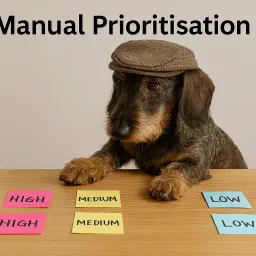
Objective Prioritisation: Manual
Executive Override and Political Triage—When Simple Beats Scientific
Manual prioritisation—a simple 1-10 scale—is what you use when frameworks feel like theatre and executive judgment beats algorithmic scoring. It's not surrender; it's pragmatism about how decisions actually get made.

Objective Prioritisation: MoSCoW
Scope Negotiation for Fixed-Deadline Projects That Can't Fail
MoSCoW—Must have, Should have, Could have, Won't have—is prioritisation stripped to its brutal essence. Perfect for fixed deadlines when stakeholders need to see exactly what gets cut if the timeline slips.

Objective Prioritisation: PIE
Potential, Importance, Ease—Prioritisation for Growth Teams Who Test Everything
Chris Goward's PIE framework—Potential × Importance × Ease—prioritises experiments and features by upside if successful. Built for growth teams optimising conversion, now used everywhere fast decisions matter.

Objective Prioritisation: RICE
Data-Driven Roadmaps for Teams Who Measure Everything
Intercom's RICE framework—Reach × Impact × Confidence ÷ Effort—turns gut instinct into quantitative roadmap decisions. Learn when RICE is your best weapon, and when it betrays you.
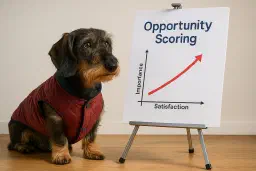
Opportunity Scoring (Ulwick): The JTBD Prioritisation Framework That Finds Unmet Customer Needs
Importance Minus Satisfaction = The Gaps Worth Closing
Ulwick's Opportunity Scoring formula (Importance + max(Importance − Satisfaction, 0)) finds the customer needs competitors miss. A practical guide to the Strategyn/JTBD prioritisation framework—with worked examples and implementation steps.
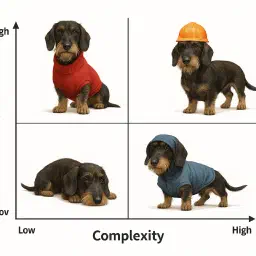
Value vs Complexity Matrix: The Visual Prioritisation Framework for Product Teams
Visual Clarity for Teams Who Think in Quadrants, Not Numbers
The Value vs Complexity Matrix is a visual 2×2 prioritisation grid that sorts every objective into Quick Wins, Major Projects, Fill-ins, or Money Pits. Plot value against complexity and see your entire roadmap at a glance.

WSJF Prioritisation: Cost of Delay ÷ Job Size (Weighted Shortest Job First)
Cost of Delay Economics for Large-Scale Agile—When It Works
WSJF (Weighted Shortest Job First) prioritises by Cost of Delay divided by Job Size. The formula: (Business Value + Time Criticality + Risk Reduction) ÷ Job Size. A practical guide to the SAFe prioritisation framework—with worked examples, Fibonacci scoring, and when WSJF fails.